Tuesday, 19 July 2011

My Year of the Cabbage Moth

If the cabbage moth


doesn't have a place in the Chinese calendar, perhaps it should this year. Or at least a month in someone's calendar. Or maybe two months. It's been a big pain in my garden since about mid-June.

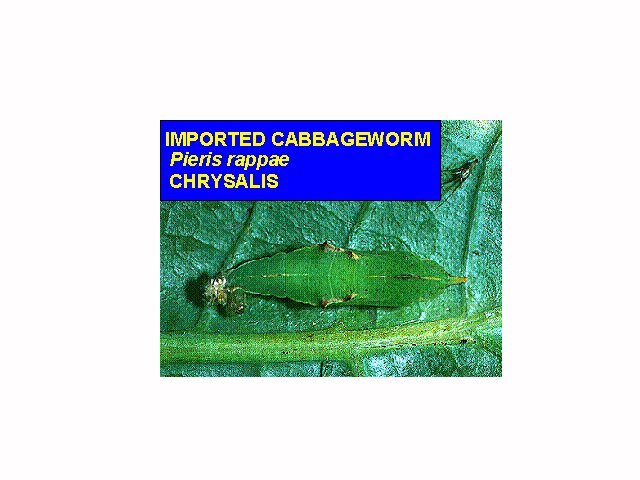
Ok so I'm told it's not a moth, it's a butterfly, (Pieris rapae) that was accidentally imported to Canada from Europe, but that doesn't endear it to me in any way.

It's white and fluttery with black-tipped wings and a telltale black spot on the upper part of the forewing. It flaps about my garden on a sunny day looking like a scrap of tissue and alights to lay its evil eggs which are tiny and which, I have lately discovered- through bitter experience - they also like to lay on juvenile radish leaves:


and, I learn to my horror, any other cruciferous plant - which includes wallflower, alyssum, or plants of the turnip, cress or mustard variety. In only a few (3-7) days their hungry little worms eat and grow and grow and eat until they pupate and start the cycle all over again, repeating at about monthly intervals throughout the summer. Heat and rain are their enemies, and so is diatomaceous earth (good luck shaking that onto a leaf in windy Victoria), Btk (Bacillus thuringiensis) and Neem oil. And me, of course.

After I finish celebrating the Year of the Cabbage Moth, I'll carry on with Year of the Slug and Year of the Bird. Check out this poor strawberry:

Friday, 1 July 2011

What's eating what

It's a late summer here, so I consider this the end of spring, and there are a lot of springtime shenanigans happening in the garden.

Number one enemy is waffling between slugs and cabbage moths. My attempts to get on top of the slug problem - by setting nifty little beer traps for them in old drinks cups - are foiled by an unknown midnight visitor (raccoon seems to be the candidate of choice) who gets downright cranky if it can't get the lids off. Great, a furred vandal with a drinking problem. As if I don't have enough problems in the plague garden.


The cabbage moths are about to drive me to near-chemical control methods. They have denuded my defenseless broccoli


with their evil eggs


which hatch into evil, hungry worms


which get large on my brassicas


and leave evidence of their digestive successes. The moderately good news is that it's highly nutritious for what's left of the plants.


The options of choice for dealing with this monster are: yellow sticky traps for the moths, and Btk for the offspring. As I saw a moth fluttering around this morning, so shall it be.

Also destined for yellow sticky traps are the evil leafminer flies who lay their evil eggs which hatch into evil offspring who tunnel between the layers of leaves - of spinach, chard, beets, sorrel...


(note worm-like shape eating its way downwards in bottom right: this is why you might not want to eat mined leaves) you name it; even beans this year.


Because they are within the leaves you can't do much except take the leaves off and drown the occupants in your slug bucket. But the yellow sticky traps (and/or neem oil) are said to be all you can do about the adults. The other advice - cover seedlings with row cover - is not an option at this stage of my plants' lives. And what an ugly garden that creates anyway, shrouded in reemay.

Slugs have been busy procreating in my garden:


Last night's hunt yielded a total of 61 babes from one half-wine-barrel planter. Now deceased. 61 fewer appetites to skeletonize my hapless plants.


It's a bad year for beans in my garden; those that have not been eaten alive are developing some nasty ailment that might be rust


- very bad news if it is. Not so bad if it afflicts, as it does, my garlic


as it won't affect the bulb. But with beans, it discolours and stunts the pods, apparently. Can't wait to find out. My fellow gardeners shake their heads and tut about beans, and most other things, saying "it's just too cold this year". I may have to give up on that bed and try to plant something else for a winter garden. Hmm. What doesn't mind being overshadowed by a giant pea trellis in an already dark garden?


There are successes to report. I've managed to stay on top of the aphids this year


and the parasitic wasps are getting the tent caterpillars under control.


Tomatoes have not yet expired from lack of sun, and a few are even setting fruit


while the volunteer potatoes are happy enough to be in sore need of hilling up


So far the aphids are not getting the better of the favas, as they did last year


and the blueberries are abundant. Soon I will cage them in hopes of foiling the birds.


The apple crop is looking awesome


and the fennel is surviving, and so is the garden supervisor.

Thursday, 9 June 2011

Something in my soffit

My first Youtube video shows the wasp eggs ready to hatch, the larvae wriggling in situ.


It was at this point I decided it was time to take the nest down, which I did last night. I wore heavy gloves (ok, and a bee veil, a headlamp, protective glasses, heavy jeans, a heavy jacket, rubber boots) and started by putting a plastic bag around the nest, holding it in place at the point it joined the soffit. Immediately the queen emerged, mad as anything, and proceeded to bat her way around the bag, while I slipped the nest free with a spatula. I clipped the bag shut and popped it into the freezer.

Sad that I couldn't watch the construction a little longer, as it was in a perfect position for observation, but there's no reasoning with a wasp.


While I was at it I thought I'd better take the hornet nest down as well, since those eggs must also be getting close to hatching. I used the same procedure as with the wasp nest, and have a new appreciation for the expression "mad as a hornet". But better to have to cope with a 3 inch long nest with one angry queen than.. well, more than that.

My bee expert tells me that these hornets hunt wasps, and for that reason, the popular fake nests you hang to keep wasps away are modelled on the (bigger, rounder, longer) nest of this one, Dolichovespula maculata.

Thursday, 2 June 2011

State of play: beginning of June

This spring has been cold and wet, and things are behind by a month or so. Which perhaps is why I still have a last few tulips bravely blooming at the back of the garden.


Oca is flourishing in pots. I'll transplant it later in the season when it's ready to set tubers.


I rigged a temporary greenhouse for the tomatoes


which include: Auriga, Bearo Plum, Black Krim, Black Zebra, Flamme, Japanese Black Trifele, Juliet Roma, Persimmon, Red Cherry, San Marzano, Speckled Roman.

Meanwhile, mint is flourishing in its pot.


Strawberries in various locations, including pots.


In another pot, a big one, I have a fig tree coming to life.


I hope to win the battle of the slugs, who are enjoying my peas.


Egyptian walking onions getting themselves in a knot, nearly ready to walk.


Some unwelcome wildlife I came upon while taking tent caterpillars out of my apple tree: Vespa maculata. Despite their excellent value in insect control (they prefer to feed on live prey) I'm told they're one of the most aggressive species and therefore not the sort of thing I want at nose level in my tree. Their nests are said to be large and impressive; this one is only the size of an apple at the moment, and rather beautiful.


More welcome visitors include bees of various shapes and sizes.


Bad news for the Blue Orchard Mason bees though. Turns out their new condo wasn't watertight and what with the wind, the rain, the fluctuations in temperature, some of the babes are going mouldy.


Rising damp evident in the basement floor.

Sunday, 15 May 2011

GTUF Chicken Tour 2011


Ten of the Gorge Tillicum Urban Farmers took a chicken tour on Sunday, visiting a couple of neighbours who already keep chickens, to see what their coops are like and find out what they have to say about the experience. We started at Lindsay's, where her four hens are kept in a converted rabbit hutch,


to which has been added this run to give them a bit more access to light (it's kept covered, to keep the hens dry and safe from predators).


She's had chickens for a while now, and is able to share the work (and eggs) with another couple. She walked us through her feeding routine, which includes this organic feed


as well as weeds, garden greens and selected kitchen scraps


and a dollop of oyster shell (plus eggshells) and - as a special treat - some chicken scratch. Edibles are kept in an old metal file cabinet, to deter rodents; and the birds should be fed early in the day so that they have time to eat the food, rather than risk having it lying around when the chickens go to sleep. She uses a mixture of wood shavings and straw for flooring; the straw keeps the coop odour-free. When the flooring is dug out it will be a great addition to the compost.


Two of the hens are happy to be handled; the other two not so much, even though they've all been reared together. Our next chicken keeper suggested that, if possible, chickens should be handled regularly so that if they need some kind of treatment it will not stress them out.


A simple chicken tractor, so they can move around the property and be safe from predators.


At Kyla's we admired her two story, terracotta-roofed coop with the airy courtyard which can be closed off if needed.


The coop is reasonably secure; there are raccoons in the area, but apparently they don't always attack chickens, and so far she hasn't had problems with them. The chickens spend the winter in a warmer greenhouse, with regular forays into the garden to grub and scratch.


She started off with bantams


which score points for cuteness,


but not for the number or size of their eggs.


Both owners spoke a bit about breeds: basically they don't care as long as the birds are healthy and reasonably productive. Heritage breeds may be tricky to care for, but possibly have fertility over a longer part of their lifespan, so it's wise to plan and research a bit before taking the plunge. Check out any sources of animals as well, to make sure you're buying from someone reputable.

Kyla's had chickens for a few years and has found them from a number of sources, noteably poultry swaps (the one in Metchosin has been recommended by a couple of people) and UsedVictoria.com - which is also excellent for finding chicken-related bits and pieces, and building materials for coops. Borden Mercantile is a recommended outlet for feed and new equipment. The usual cautions apply if you're acquiring used equipment: it needs to be spotlessly clean so you don't end up with parasites or more serious diseases.

Both Kyla and Lindsay agreed on a couple of important points. One was that neither planned to do away with members of their flock when they stopped laying. They pointed out that hens don't abruptly stop laying, but have diminishing fertility when allowed to lay naturally (battery hens are tricked into year-round laying by exposing them to unusual levels of light, and so in addition to being in an exhausted physical condition they can also exhaust their supply of eggs in a year or two). Some can go on producing the odd egg until they are as much as 8 years old. They also pointed out the additional value of hens, which is to convert garden waste into manure which can help their compost and build the nutrient levels of their soil. And they are just entertaining to have around.

Smart chickens consult their calendar...


And a glimpse of summer in the greenhouse: